Master Your Workflow with a Canva To Do List Template
There is a distinct satisfaction in crossing a task off a list. It is a small, visual victory that propels us forward. But in a digital world, our planning tools often lack personality and fail to inspire. A generic note app or a plain text file can make productivity feel like a chore rather than a creative process. This is where a thoughtfully designed To Do List Canva Template changes the dynamic, transforming a simple organizational tool into a visually engaging part of your daily routine.
The Anatomy of a Practical Design Asset
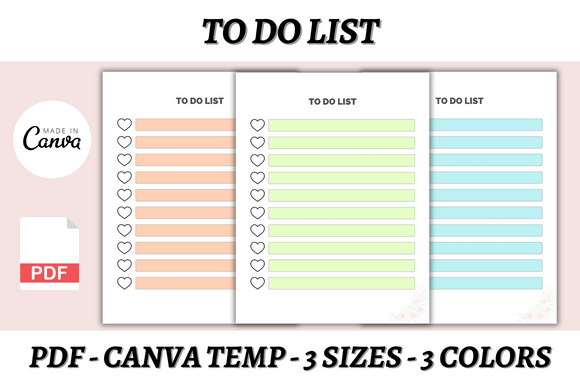
A well-crafted template is more than just a pretty layout; it is a functional piece of graphic design built for real-world use. The visual characteristics of a quality To Do List Canva Template are rooted in clarity and intention. You will typically find a clean, uncluttered layout that guides the eye naturally from one section to the next. The typography is carefully chosen for readability, often pairing a clear sans serif font for body text with a complementary display font or handwritten font for headings to inject personality. The color palette is cohesive and muted enough not to distract, yet distinct enough to create visual hierarchy, helping you instantly separate priority tasks from minor ones. The overall appeal is one of organized calm—a modern typography meets minimalist aesthetic that makes the act of planning feel less stressful and more streamlined.
Where Function Meets Visual Hierarchy
The true power of this design asset lies in how it influences your interaction with your tasks. Good visual hierarchy is not just a design principle; it is a productivity tool. By using different font weights, sizes, and subtle color accents, the template creates an immediate structure. Your most important tasks stand out, sub-tasks nest logically, and deadlines are easy to spot. This reduces cognitive load, allowing you to scan and process information quickly. For a business owner or content creator, this means less time organizing your list and more time executing it. The consistency of the design across different pages—whether an A4 for your desk or an A5 for your bag—also reinforces a sense of professionalism and control, which subtly influences your brand perception even in personal productivity.
Integrating Templates into Your Creative Workflow
While its primary function is planning, a To Do List Canva Template serves as a versatile starting point for numerous projects. Its value extends far beyond personal use. As a pre-template, it is a foundational design asset that can be adapted. A blogger might customize it into a content calendar or editorial checklist. A small business owner could brand it with their logo design and color scheme to create a professional client onboarding checklist. A social media manager could repurpose the layout for a campaign planning sheet. The ability to edit fonts, colors, and layouts in Canva means you can seamlessly integrate this asset into your existing brand identity, ensuring all your operational documents feel cohesive.
From Personal Planning to Commercial Projects
The applications are remarkably broad. Consider using a customized version as a free download for your email list, a valuable digital resource that provides immediate utility to your audience. For those in publishing or editorial design, it can be adapted into a manuscript submission tracker or a book launch checklist. The template’s clean structure is also ideal for packaging design checklists or web design project timelines. The key is to view the template not as a fixed product, but as a malleable framework. By changing the typeface to a serif font, you give it a more traditional, academic feel suitable for a consulting firm. Switching to a playful script font could make it perfect for a wedding planner or a craft business. This adaptability is what makes it a smart investment of your time.
Practical Guidance for Selection and Customization
When choosing a To Do List Canva Template, evaluate it as you would any premium font or creative font. First, assess the included styles and formats. Does it come in the paper sizes you need (A4, A5, US Letter)? Are there multiple color options? Look for templates that offer lifetime access and instant download, which are hallmarks of a professional offering. Next, consider font pairing. A good template will already demonstrate a strong pairing, but ensure the chosen typeface aligns with your project’s tone. Test the readability at a glance—can you quickly identify task categories and priorities?
For commercial use, which is often the goal for entrepreneurs and designers, review the licensing. Most templates sold on marketplaces like Etsy or Gumroad include a commercial license, allowing you to sell the end product. This is where the done-for-you aspect shines. You save considerable time not designing from scratch, yet you can still sell the customized result as your own product on your website, Shopify, or other platforms. Always check the specific terms of the template provider. Finally, experiment. Use Canva’s free tools to swap in your brand fonts and colors. Replace placeholder icons with ones that reflect your industry. The goal is to make the template an invisible part of your workflow—so integrated and personalized that it feels like it was made just for you and your business.
In the end, a To Do List Canva Template is a small investment in clarity. It acknowledges that how we organize our work matters, not just for efficiency, but for our mindset and the recognition of our professional brand. By leveraging a well-designed, editable framework, you equip yourself with a tool that is both immediately functional and infinitely adaptable, supporting your productivity today and your creative projects tomorrow.